

Binance Coin (BNB) Transferred to Wallet: A Complete Guide to Sending, Receiving & Security

In the dynamic world of cryptocurrency, moving your assets is a fundamental action. The phrase "Binance Coin transferred to wallet" represents a crucial step for any BNB holder, whether you're securing funds in a personal wallet, preparing for a decentralized finance (DeFi) transaction, or simply taking control of your assets. This comprehensive guide will walk you through everything you need to know about transferring BNB, ensuring your transactions are smooth, secure, and successful.
Understanding Binance Coin (BNB) and Wallet Basics
Before initiating a transfer, it's essential to grasp the basics. Binance Coin (BNB) is the native cryptocurrency of the BNB Chain ecosystem, initially launched on the Ethereum blockchain but now primarily operating on its own network. When you transfer BNB, you are moving a digital asset recorded on a blockchain. A cryptocurrency wallet is not a physical holder of coins but a tool that manages the cryptographic keys (a public address and a private key) that allow you to access and control your BNB on the blockchain. The act of transferring means you are signing a transaction that reassigns ownership of those BNB from one address (like an exchange account) to another (your personal wallet).
Step-by-Step: How to Transfer BNB from an Exchange to Your Wallet
The most common transfer scenario is moving BNB from a centralized exchange like Binance to a self-custody wallet. Here’s a general step-by-step process to ensure your BNB is transferred safely to your wallet:
1. **Choose and Set Up Your Wallet:** First, select a compatible wallet that supports BNB and the specific network you intend to use (e.g., BNB Smart Chain). Popular options include Trust Wallet, MetaMask (with BSC network configured), and Ledger or Trezor hardware wallets. Securely back up your recovery phrase—never share it.
2. **Locate Your Wallet's Receiving Address:** Open your chosen wallet and find the option to "Receive" or "Deposit" BNB. This will display your unique public address, often as a long string of characters and a QR code. Double-check that the network shown is correct (e.g., BEP20 for BNB Smart Chain).
3. **Initiate the Withdrawal on the Exchange:** Log into your exchange account (e.g., Binance), navigate to your BNB wallet, and select "Withdraw." Paste your personal wallet's receiving address carefully. This is a critical step; an error here can result in permanent loss of funds.
4. **Select the Correct Network:** This is arguably the most vital step. You must choose the blockchain network that matches your wallet's network. For BNB, the common choices are BEP20 (BNB Smart Chain) or BEP2 (BNB Beacon Chain). Sending via the wrong network will cause your BNB to be lost.
5. **Confirm the Transaction:** Enter the amount, review all details (address and network), and confirm. The exchange will process the withdrawal, and you can track the transaction using the provided Transaction ID (TXID) on a blockchain explorer like BscScan.
Critical Security Considerations for Your BNB Transfer
Security is paramount when handling cryptocurrency transfers. A single mistake can be costly. Always verify the receiving address meticulously—consider copying and pasting, then checking the first and last few characters. As emphasized, network selection is non-negotiable; confirm with your wallet's documentation which network it uses for BNB. Be aware of transaction fees (gas fees), which are paid in BNB on the BNB Smart Chain, and ensure your balance covers them. Furthermore, be vigilant against phishing sites and fake wallet apps. Only download wallets from official sources and never enter your private key or seed phrase on any website.
Why Transfer BNB to a Personal Wallet? Key Benefits and Use Cases
Why go through the process of transferring BNB off an exchange? Holding funds in a personal wallet offers significant advantages. It provides true self-custody—you own your private keys, meaning you have full control and responsibility over your assets, reducing exposure to exchange-related risks like hacking or operational issues. A personal wallet is also the gateway to the expansive world of Web3. Once your BNB is in a compatible wallet, you can interact directly with decentralized applications (dApps), provide liquidity on decentralized exchanges (DEXs) like PancakeSwap, stake for rewards, or participate in NFT marketplaces. For larger, long-term holdings, the security of a hardware wallet integrated with these software interfaces is considered best practice.
Troubleshooting Common BNB Transfer Issues
Even with caution, issues can arise. If your BNB transfer is taking longer than expected, first use the TXID on a blockchain explorer to check its status. If it shows "Success," the funds are on the blockchain, and you may need to add the correct token contract to your wallet interface. If you accidentally sent BNB via the wrong network (a common error), recovery is complex and not always possible; you must immediately contact the support of both the sending exchange and receiving wallet provider, though success is not guaranteed. This highlights the absolute importance of a test transaction: always send a small amount first to verify the entire process before moving larger sums.
Beyond the Basics: BNB in the Broader Crypto Ecosystem
Successfully transferring BNB to your wallet unlocks its potential beyond a simple store of value. BNB serves as the lifeblood of the BNB Chain ecosystem. It is used to pay for transaction fees on both the BNB Smart Chain and BNB Beacon Chain, making it essential for any activity. In the realm of DeFi, BNB can be used as collateral for loans, swapped for other tokens, or staked in liquidity pools to earn yield. It also plays a role in the Binance ecosystem for paying exchange fees at a discount and participating in token sales. Mastering the secure transfer of BNB is the foundational skill that enables you to explore all these opportunities safely and confidently.
In conclusion, the process of having Binance Coin transferred to your wallet is a fundamental competency for any crypto user. By understanding the steps, prioritizing security through double-checking addresses and networks, and appreciating the benefits of self-custody, you can manage your BNB holdings effectively. This knowledge not only protects your assets but also opens the door to the full spectrum of possibilities within the decentralized digital economy. Always remember: in crypto, you are your own bank, and with that power comes the responsibility to act with care and diligence.
“Binance Coin (BNB) Transferred to Wallet: A Complete Guide to Sending, Receiving & Security” 的相关文章

数字巨头的新征途;Ripple、Circle、BitGo_剑指美国银行牌照
数字巨头的新征途:Ripple、Circle、BitGo 剑指美国银行牌照标签: 加密货币 银行牌照 稳定币 联邦储备系统 监管变革 金融合并目录· 梦想与现实的交织:数字巨头为何叩响银行大门· 牌照的魔力:直通美联储的金色入场券· 稳定币的未来:天才法案的催化剂·&n...
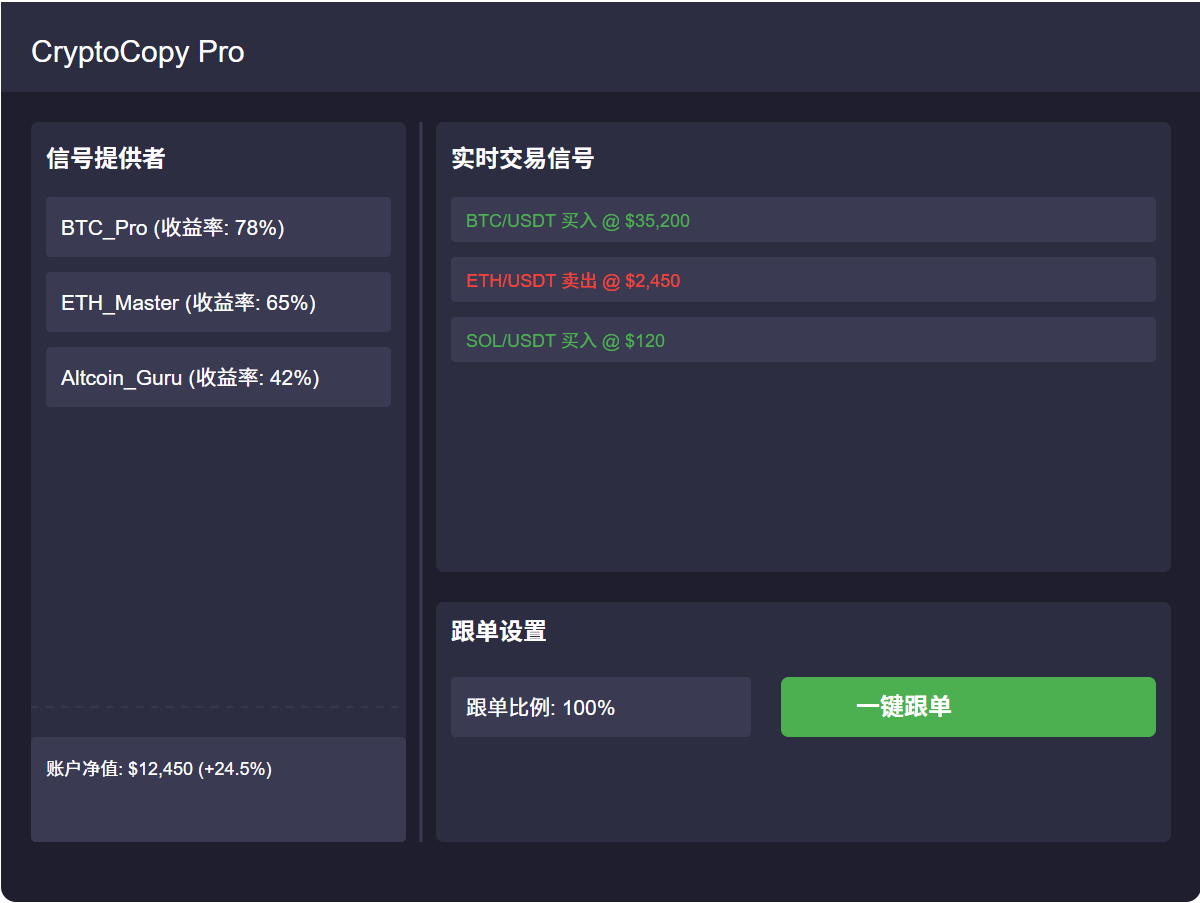
一键跟单平台 - 虚拟货币智能交易解决方案
一键跟单平台:虚拟货币交易的新时代解决方案在快速发展的虚拟货币市场中,一键跟单平台正成为越来越多投资者的首选工具。这种创新的交易方式让普通投资者也能轻松复制专业交易者的操作,无需深厚的市场分析能力即可参与加密货币投资。一键跟单平台的核心优势虚拟货币市场的高波动性既带来机会也伴随风险,一键跟单平台通过...

精品!《股票操盘手之“T+0”滚动交易手册》让你看过就回味无穷!
第四章 高抛低吸分时图“T+0”操作实战套利技巧分时图是一切走势和交易的基础,不夸张地讲,看懂分时图、善用分时图走势,投资者想不赚钱都难。一切交易的目的都是为了盈利,而盈利只有一种途径:不断提高成功率。而盘中“T+0”操作就是最基础的方法,也更具确定性。“T+0”操作为什么要看分时图从前面章节的阐述...

USDT TRC20安全吗?全面解析波场链USDT的安全性 | 加密货币指南
USDT TRC20安全吗?全面解析波场链USDT的安全性什么是USDT TRC20?USDT TRC20是基于波场(Tron)区块链发行的USDT稳定币,与ERC20(以太坊)和OMNI(比特币)版本的USDT相比,它以其极低的手续费和快速的交易确认时间受到广泛欢迎。然而,关于其安全性一直存在争议...
债务漩涡中的方舟;达利欧的“15%”避险指南与数字黄金的崛起
债务漩涡中的方舟:达利欧的“15%”避险指南与数字黄金的崛起标签: 比特币 黄金 瑞·达利欧 债务危机 投资组合 法币贬值目录:· 序章:亿万富翁的警世恒言· 达利欧的新“圣经”:15%的避险配方· 美国债务困局:一场“死循环”的蔓延· 财政部报告:警钟长鸣,...

巨头的“FOMO”与特朗普的“砖头”;AI狂潮下的资本流向与加密市场的强力共振
巨头的“FOMO”与特朗普的“砖头”:AI狂潮下的资本流向与加密市场的强力共振标签: 宏观经济 Mag 7 AI投资 特朗普政策 加密货币目录:· 序章:代码的狂欢,资本的迁徙· 巨头“FOMO”:6500亿美元的豪赌· 总统的“砖头”之战:政策与市场的角力· ...